
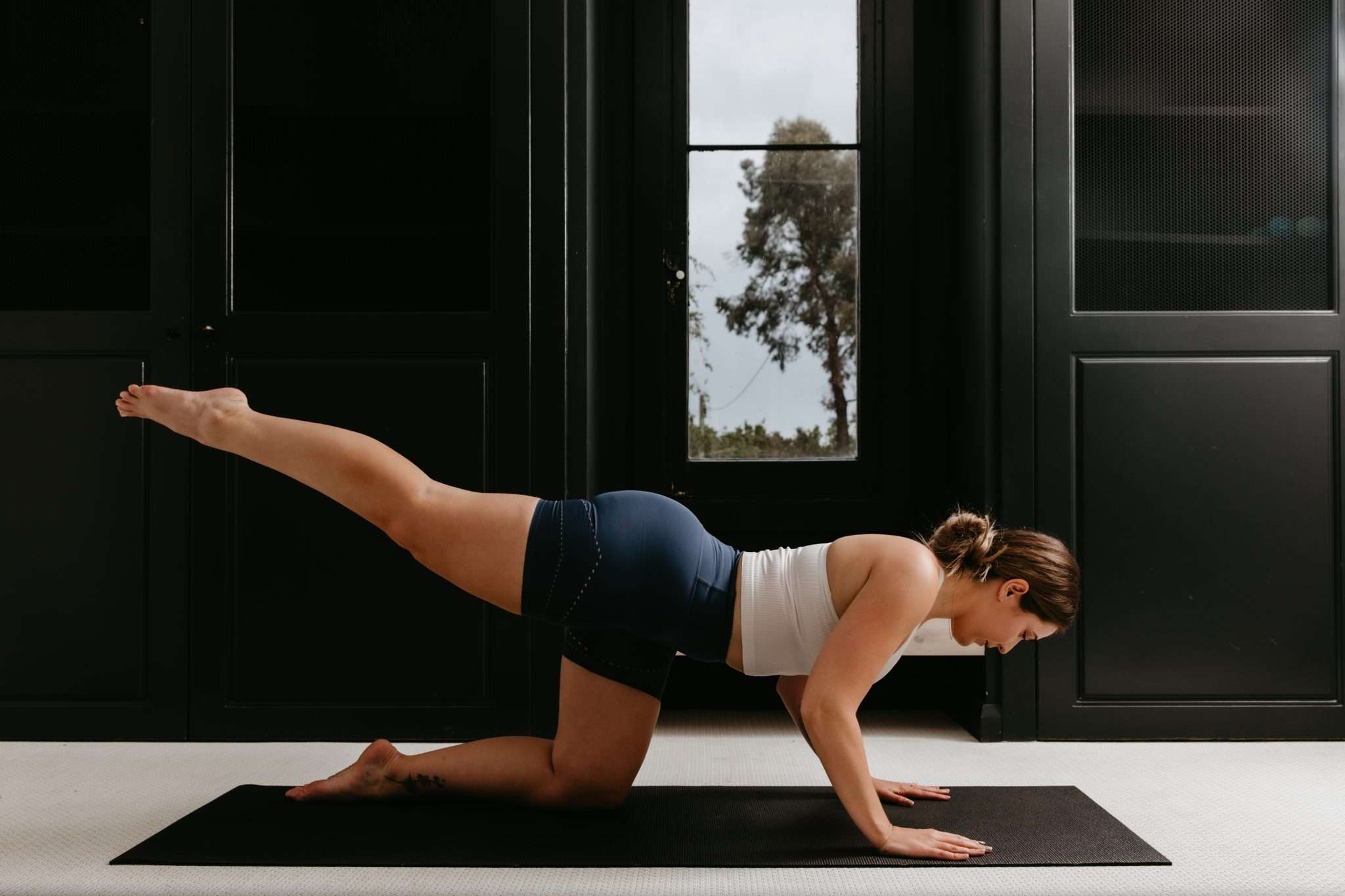
“Should I be seeing a physio, or should I be doing pilates?”
We get this question at reception almost every day. Usually from someone with lower back pain that’s been grumbling for six to twelve months. They’ve tried stretching. They’ve tried yoga. Maybe a friend told them to see an osteo. Another friend swore pilates fixed their back. A GP mentioned physiotherapy. So they arrive at our Prahran studio genuinely unsure which door to walk through.
The honest answer is: it’s not either/or. Physio and pilates treat lower back pain in completely different ways, at completely different stages of the problem. The question isn’t which one is “better” — it’s which one you need right now, and in what order.
Here’s how we think about it, in the order we’d usually recommend to a new client.
Physiotherapy is a diagnostic and treatment discipline. When you arrive at a physio with back pain, their job is to answer three questions: what’s causing it, how bad is it, and what’s the fastest safe path back to normal.
That process looks like this:
A physio will usually see you between three and eight times over four to eight weeks for a typical mechanical back pain presentation. By session four or five, you should be significantly better. If you’re not, a good physio will tell you so and change the plan.
Physio is the right first call when:
Short version: if it hurts badly or recently, see a physio first.
Pilates is a strength and motor-control discipline. It doesn’t diagnose anything. It doesn’t treat acute pain. What it does — and does better than almost any other form of exercise — is rebuild the specific muscular support system that protects your spine: deep abdominal muscles, multifidus (a small but critical spinal stabiliser), glutes, and the muscles that coordinate hip and pelvis movement.
For most chronic lower back pain, the underlying problem isn’t acute tissue damage — it’s that the muscles that should be stabilising your spine have gone to sleep, usually after years of sitting, stress, and compensatory movement patterns. You can see this on scans in people who have no back pain at all, and you can see it in people with severe back pain whose scans look normal. The tissue isn’t the whole story. The software running the tissue is.
Pilates rebuilds that software. It teaches you — in a slow, deliberate, precise way — how to fire your deep stabilisers, breathe in a way that supports your spine, and move from your hips rather than your lower back. Reformer pilates adds graded resistance to that re-training, which is why runners, post-natal clients and office workers with recurring back pain tend to respond so well to it.
Pilates is the right call when:
Short version: pilates rebuilds the system. Physio fixes the current problem.
For most people with any meaningful back pain, the right sequence is:
Stage 1 — Acute phase (weeks 0–4): Physio. Get the pain down, get a diagnosis, get moving again, establish what’s actually wrong. No one can do meaningful strength work when they’re in enough pain that they’re compensating every time they move.
Stage 2 — Recovery phase (weeks 4–12): Physio, transitioning into pilates. As the acute pain settles, your physio starts introducing more loaded exercise. At Sum Of Us, this is often where clinical pilates sessions begin — the same physio who’s been treating you now programs your pilates work on the reformer, with full visibility of your diagnosis and medical history. You’re not being handed off; you’re being progressed.
Stage 3 — Strength and prevention (weeks 12+): Pilates. Once the pain is gone and basic function is restored, the job is to stop it coming back. Most of our long-term clients move into two or three group reformer or mat classes a week, sometimes with occasional physio sessions as needed (every three to six months as a tune-up). This is where pilates earns its reputation as “the thing that fixed my back” — because by the time someone says that about it, they mean stage 3, after a physio has already done the hard diagnostic work.
Skipping to stage 3 is the single most common mistake we see. People with acute back pain book into a group reformer class because a friend recommended it, push through exercises their body isn’t ready for, and end up worse. Not because pilates is dangerous — it isn’t — but because it was the wrong tool for the stage they were at.
To make the framework concrete, here are three typical Sum Of Us clients:
The desk worker (34, accountant, South Yarra). Back pain on and off for two years, no clear trigger, worst in the afternoons. No leg symptoms. Our plan: three physio sessions over four weeks to address joint stiffness and a weak glute medius, then transition to two group reformer classes a week ongoing. Six months in, he’s pain-free for the first time in three years.
The new runner (41, marathon training, Windsor). Sudden onset of sharp lower back pain two weeks into a new training block. Our plan: physio only for six to eight weeks — this is a training-load issue, not a de-conditioning one. Pilates isn’t the right tool here until the acute issue settles and we can assess whether gait re-training is needed. See running injuries for more on the running-specific patterns we see.
The post-natal client (29, three months postpartum). Chronic lower back pain since late pregnancy, plus pelvic floor concerns. Our plan: a single women’s-health physio assessment first (pelvic floor and diastasis assessment can’t be skipped), then straight into our pre and postnatal pilates class — it’s designed for exactly this presentation and the instructor is trained in modifications for each stage of recovery.
Same symptom — lower back pain — three completely different plans, depending on the cause.
Alright. Here’s the short, direct answer:
If you genuinely don’t know where you fit on that list, take our 60-second quiz — it’s designed exactly for this decision.
Or call the studio on (03) 9510 6311. Reception has this conversation multiple times a day; two minutes on the phone will get you pointed in the right direction.
We’re at 602 High Street, Prahran. Physio rooms and reformer studio are under the same roof — which is exactly the point.